

The investment taking Göbeklitepe from London to the world stage
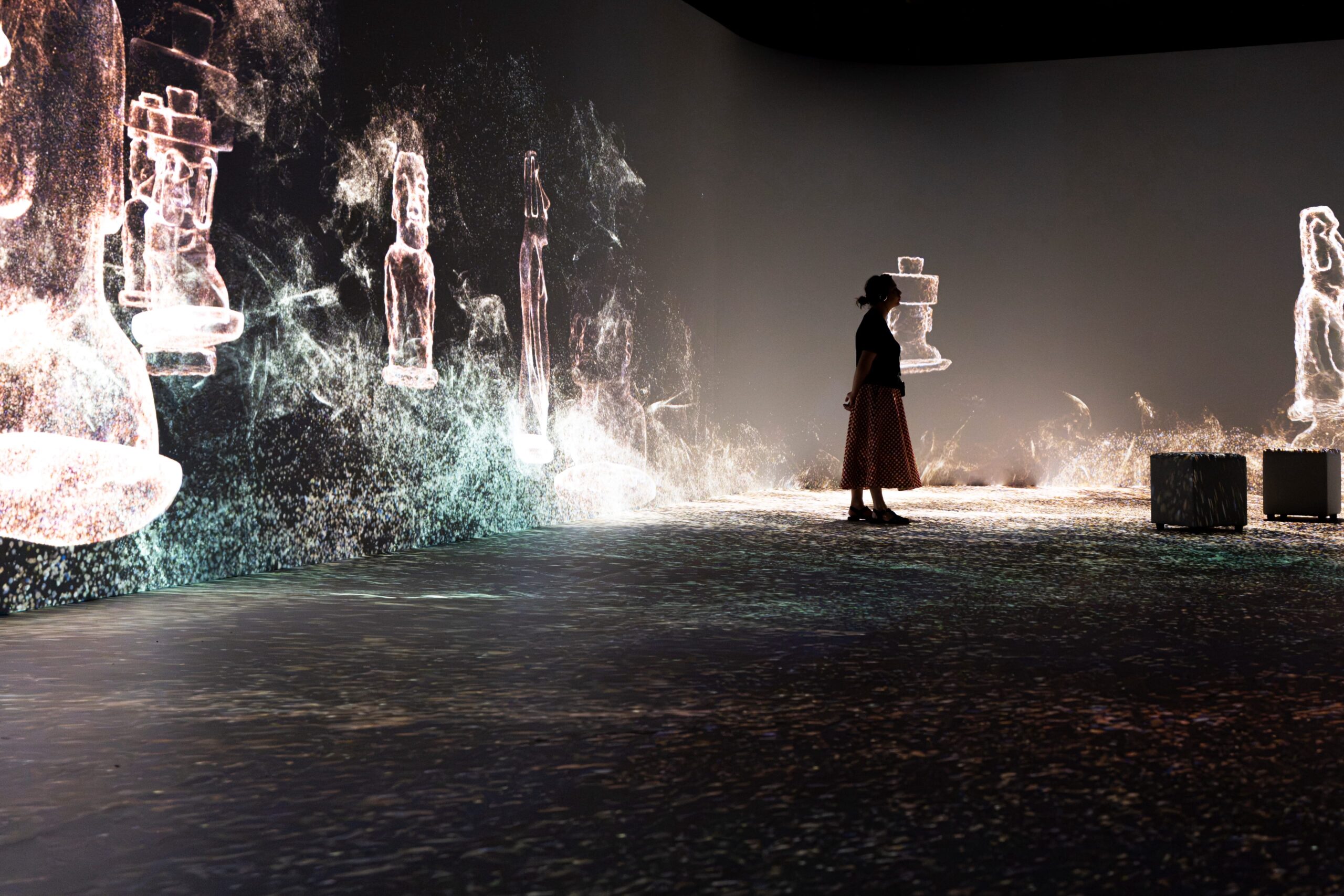
DEM Museums, the company behind the Hagia Sophia and Ephesus Experience Museums in Türkiye, has made its first overseas investment in London. Opened with an investment of £22 million, the Timewalk Experience Museum tells the story of 12,000 years of human history through 22 civilisations, with Göbeklitepe at the forefront. The company’s next targets are Rome, Tokyo, China and the USA.
Last week in London I set out on a striking journey through 12,000 years of human history and 22 civilisations. The setting for this journey, which stretches from Göbeklitepe to Babylon and from Ancient Egypt to the Maya civilisation, was the Timewalk Experience Museum, which opened its doors in July.
The museum’s official opening took place on 15 October 2026 with a reception attended by Osman Koray Ertaş, Türkiye’s Ambassador in London, and diplomatic representatives of various countries.
Together with a group of fellow journalists, I had the opportunity both to attend the opening and to get to know DEM Museums, which created the Hagia Sophia History and Experience Museum and the Ephesus Experience Museum in Türkiye, and the Astel Group of Companies behind it, more closely.
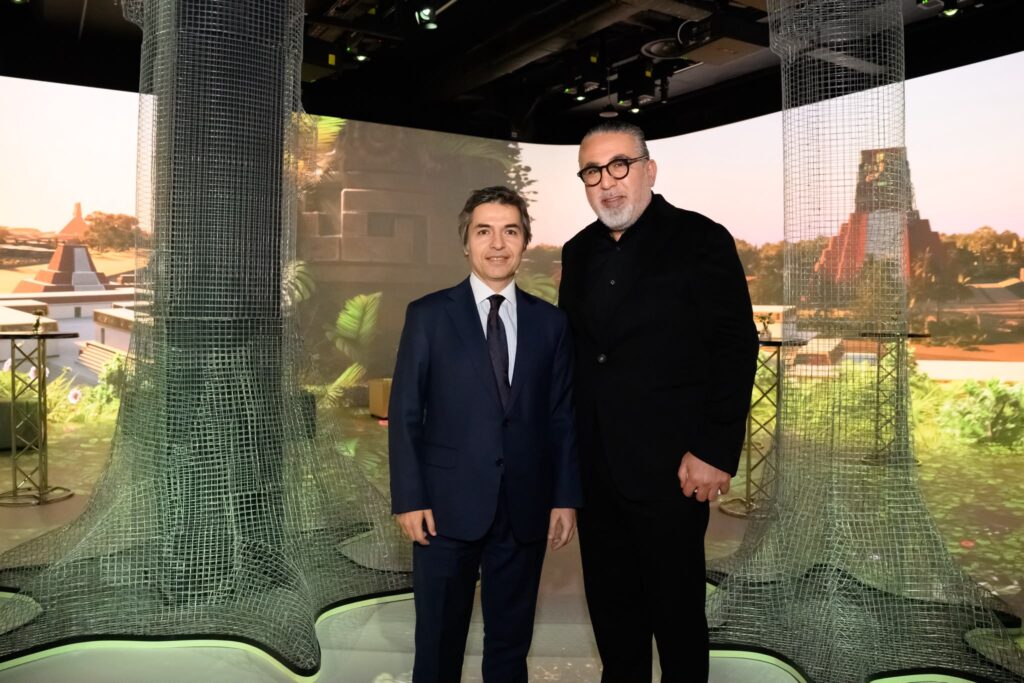
We met Mehmet Uğur Esin, Chairman of the Board of the Astel Group of Companies and DEM Museums, and Eda Bildiricioğlu, CEO of DEM Museums, for the first time. I had been curious about the history, investments and international growth plans of this company, whose name we have been hearing in Türkiye for the past four or five years, particularly through the Hagia Sophia and Ephesus projects. The London visit also allowed us to hear the answers to these questions directly from its executives.
From Mehmet Uğur Esin, for example, we learned that years ago they had also carried out the project to digitise the 1,800 screens of Mars Cinemas. The group now investing in experience museology has a background in audiovisual technology.
Frankly, it is striking that in London, home to some of the world’s most important museums, a Turkish company has invested £22 million to bring the atmosphere of millennia-old civilisations back to life with advanced technology.
I had previously seen experience spaces created with similar technologies in Tokyo. But this was the first time I had found myself inside a 12,000-year historical journey. And this time, there was a company from Türkiye behind the experience.
Astel was founded in 1991
Uğur Esin says that the Astel Group of Companies, to which DEM Museums belongs, has been active in television, cinema and audiovisual technologies since 1991.
The group’s first project in arts and culture was carried out at Kabatepe in 2011. It went on to take part in a total of 18 museum and cultural projects in Türkiye and abroad. Kazakhstan, Azerbaijan, Uzbekistan, Turkmenistan and Spain are among the countries where this work was carried out.
DEM Museums, founded in 2020, carried the group’s experience in technology into new-generation museology.
The Hagia Sophia and Ephesus Experience Museums, which opened in 2023, were the company’s major investments in this field. To date, the two museums have won a total of 16 international awards.
Eda Bildiricioğlu, CEO of DEM Museums, describes the company’s approach as follows:
“We set out on a journey to combine our respect for the deep-rooted heritage of traditional museology with the multi-sensory technologies of the future. In our experience museums we do not just tell history, we bring it to life.”
£22 million for London, with Rome and Tokyo next in line
According to the company, £22 million, approximately TL 1.5 billion, was spent on Timewalk, DEM Museums’ first international investment.
Located at Immerse LDN in London’s ExCeL area, the museum is the first step in the company’s international growth strategy.
One of the things I was most curious about in our conversations with the executives was whether this investment would be followed by more.
It appears that London is just the beginning. The company aims to carry out new projects in Rome in 2027 and, in 2028, in Japan, with Tokyo in the lead, as well as in China and the USA. Feasibility studies are under way in these countries.
Budgets close in size to the London investment are envisaged for the new projects.
The question of financing is also noteworthy. DEM Museums states that it finances its overseas investments from its own resources and that it has not used state incentives for these projects.
Looking at the scale of the investments in Türkiye, we see that approximately €19 million was spent on the Hagia Sophia History Museum and approximately €26 million on the Ephesus Experience Museum.
A five-year agreement has been signed with ExCeL London for Timewalk. The aim is to establish a business model that will deliver a return on the investment within this period.
Revenue is not expected from ticket sales alone. Sponsorships, corporate partnerships and sales of museum-exclusive products are also among the sources of income.
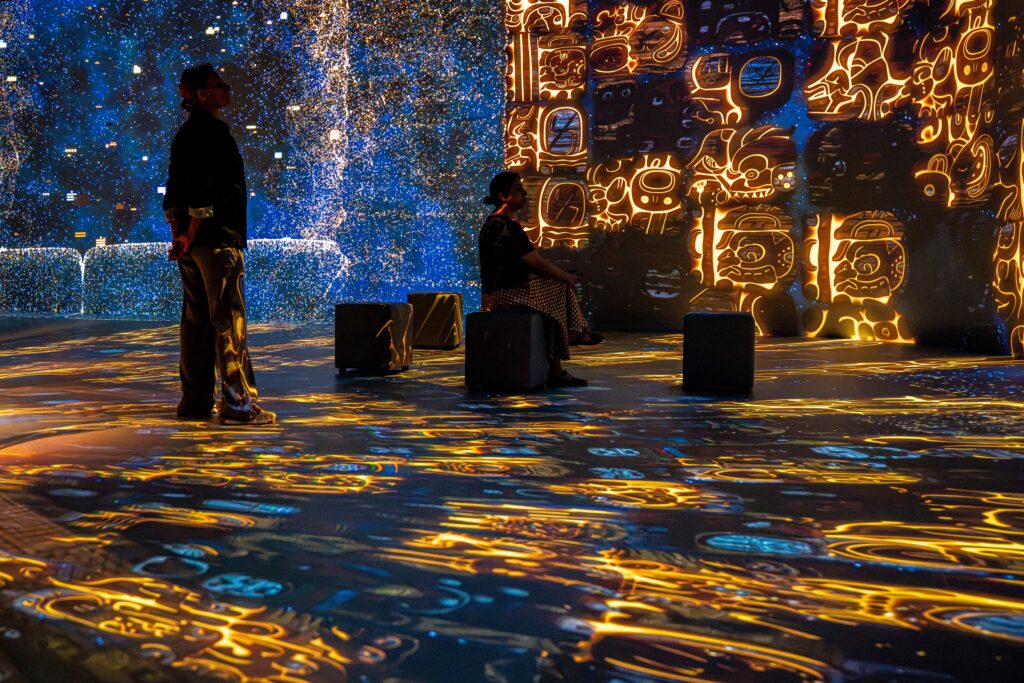
Why London? A £130 billion experience economy
There is also an important economic rationale behind the choice of London for the first international investment.
According to figures shared by DEM Museums, the experience economy in the United Kingdom is worth £130 billion. The immersive experience market is put at £98 billion. This market is forecast to reach £350 billion by 2030.
Timewalk is reported to have welcomed 50,000 visitors during its pre-opening period. The target for the first year is 1 million visitors.
The company’s longer-term goal is to introduce its international projects to 100 million people over the next five years.
Eda Bildiricioğlu sums up this goal as follows:
“London was the first step of our international journey. We aspire to bring to light the stories within the world’s unique civilisations, cultures and historical heritage, carry them into the present day and share them with the people of today.”
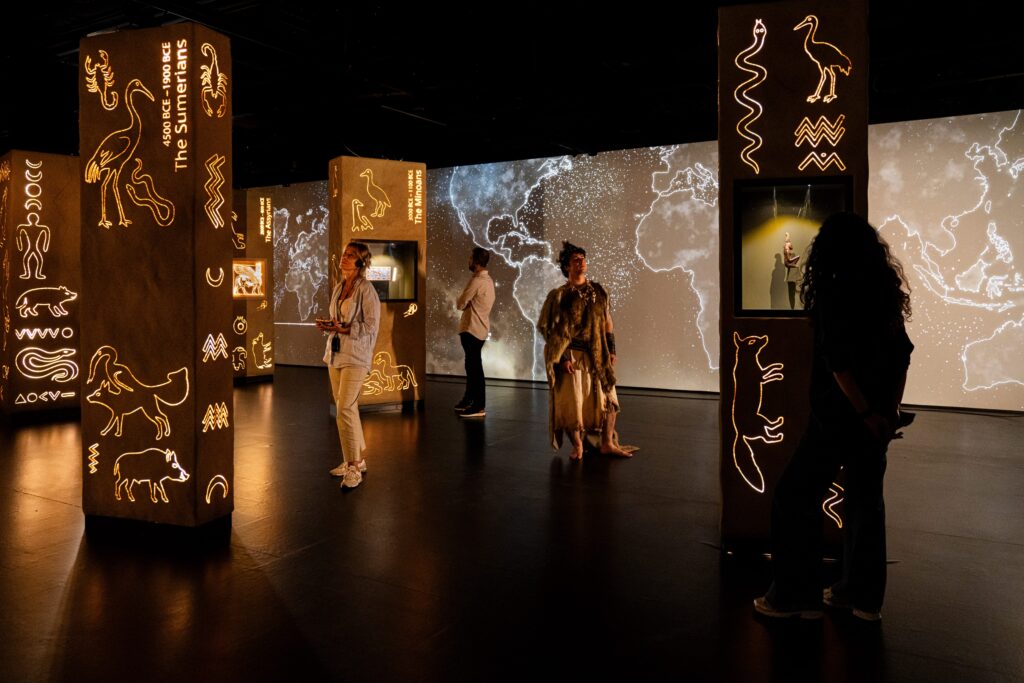
A 12,000-year journey from Göbeklitepe to the Maya civilisation
One of the things that impressed me most at Timewalk was the way the stories of different civilisations are brought together in a single historical journey.
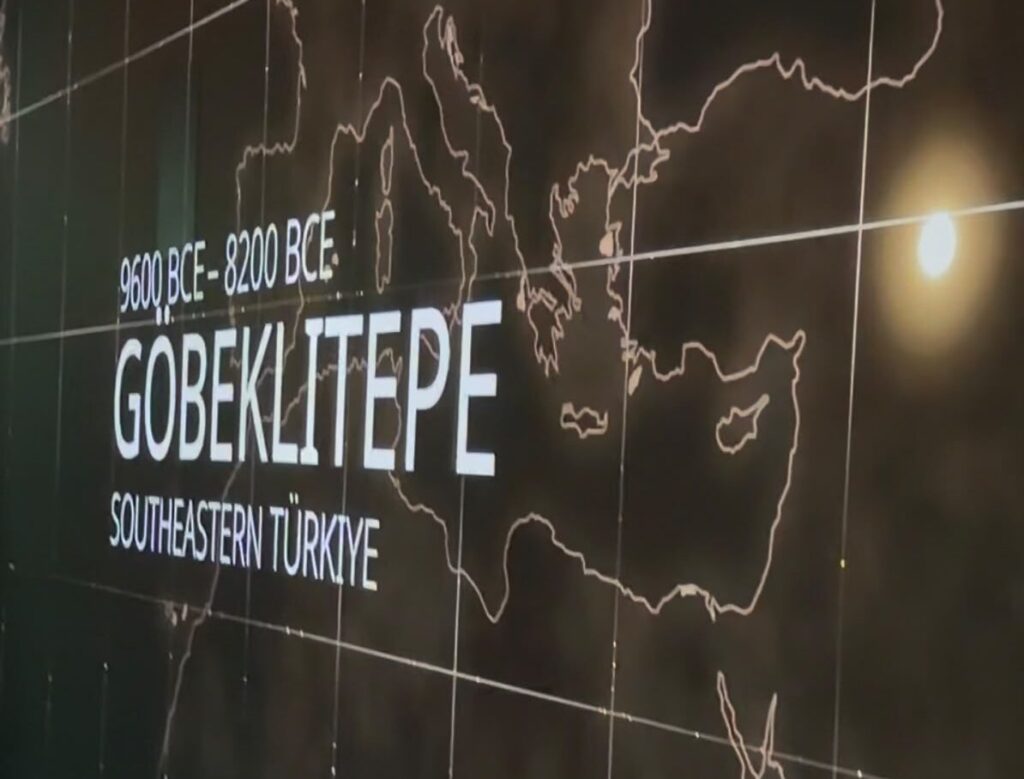
One of the key stops in the narrative is Göbeklitepe. One of the most striking examples of the period when people began to come together around shared rituals and belief systems, Göbeklitepe is among the most important cultural heritages that Anatolia has given to human history.
From here, a narrative has been built that extends to Babylon’s urbanisation and knowledge systems, Ancient Egypt’s understanding of death and eternity, the Maya civilisation’s knowledge of mathematics and astronomy, and the Moai statues of Rapa Nui.
In a traditional museum you see historical artefacts, remains or documents. At Timewalk, however, you encounter not so much the artefacts themselves as the atmosphere of the worlds to which they belonged.
The walls, floors, sounds and images become part of the narrative. Unlike watching a history documentary, you feel yourself inside the story.
Of course, in experience museums of this kind, historical accuracy matters as much as visual impact. A narrative created with such powerful technologies needs to rest on scientific foundations.
For this reason, DEM Museums worked with four expert consultants during the preparation of the project.
Prof. Dr. Necmi Karul, Coordinator of the Taş Tepeler Project, advised on the Göbeklitepe section; Prof. Eleanor Robson of University College London on the Babylon section; journalist, author and historian Laurence Blair on the Rapa Nui and Maya sections; and Dr. Edward Scrivens on the Egypt section.
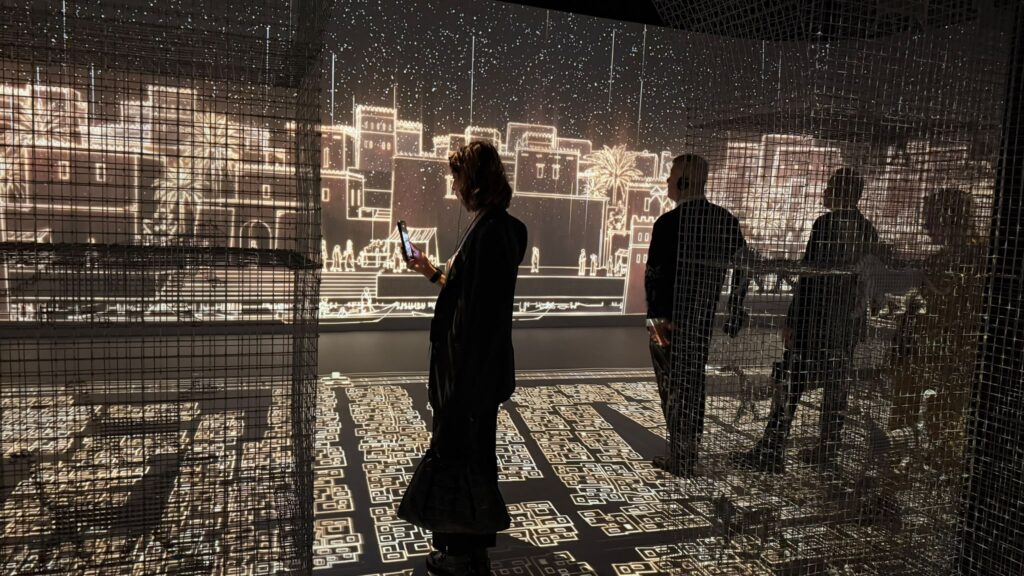
Voices, too, carry you into history
Another of the details that impressed me most at Timewalk was the voice-overs. As you move from one civilisation to the next, it is not only the images and the space that change; the narrator’s voice also carries you into the atmosphere of that era.
The Turkish narrations were voiced by Selçuk Yöntem and Devrim Yakut. In particular, the harmony between the voices, the images and the music heightens the impact of this journey through history. For the English narrations, the voices of David Schofield and Olivia Williams were used.
What is more, the museum offers 25 language options. A separate narration has also been prepared for children. The fact that the sound recordings were made in Hollywood studios also shows the importance attached to the production.
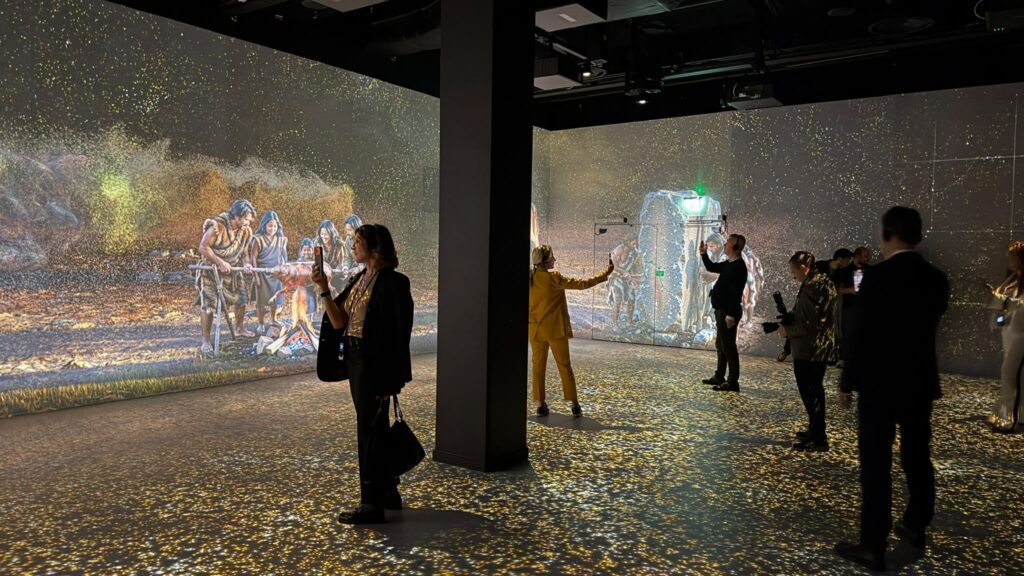
A 250-strong team and a 1.5-billion-pixel visual world
Timewalk’s technical infrastructure also shows the scale of the investment.
The museum’s 2,500-square-metre experience space uses around 200 projection systems, 90 media servers working in synchronisation and more than 100 lighting units.
The 1.5-billion-pixel visual world is supported by three-dimensional sound technology. The image, sound and lighting systems are managed through a central control infrastructure.
Preparing the project took more than two years. A 250-strong team of historians, scriptwriters, creative directors, architects, 2D and 3D artists and technology specialists took part.
Designed to serve up to 2,500 visitors a day, the museum has an operations team of 30 people. 30% of the staff are Turkish and 70% are from other countries.
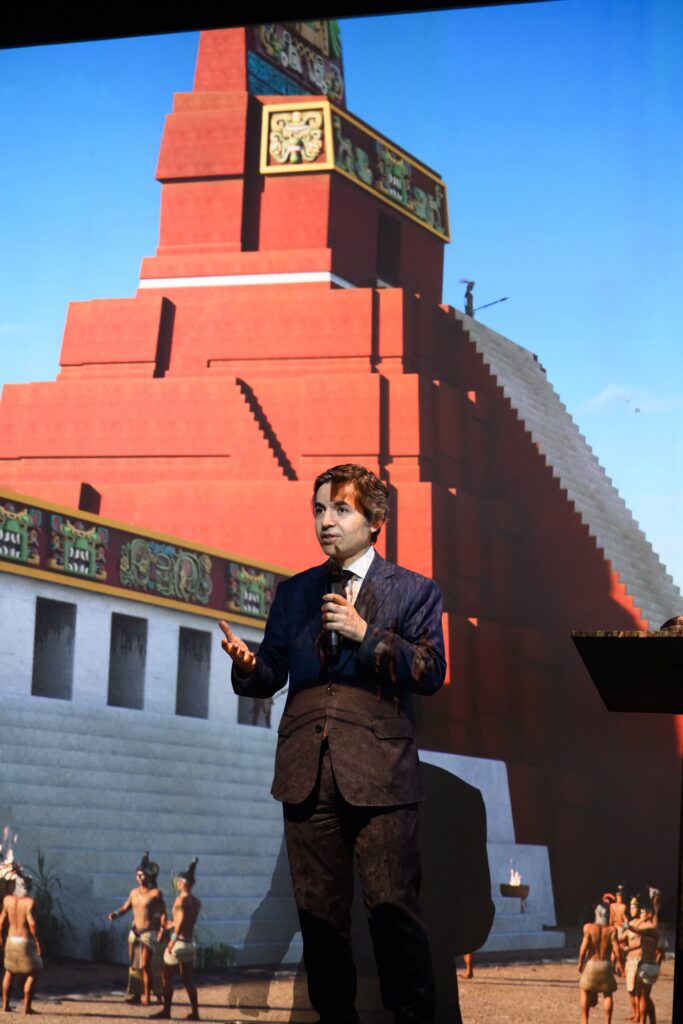
Ambassador Ertaş: “Seeing civilisations in situ is something else entirely”
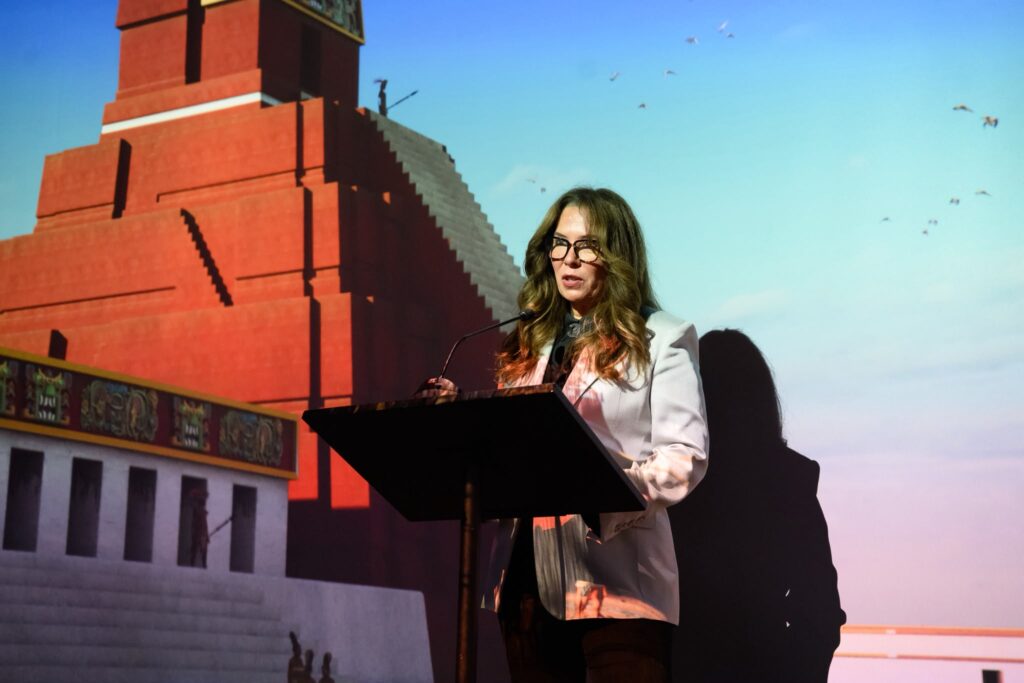
Speaking at Timewalk’s official opening, Osman Koray Ertaş, Türkiye’s Ambassador in London, said that we need to be open to new technologies while preserving our traditions and our history, and noted that Timewalk brings these two approaches together. Ertaş did not neglect to make an important reminder: saying “Seeing civilisations, their remains and their artefacts in their own original locations is a different story altogether”, he invited those visiting Timewalk to see Göbeklitepe at its original site in Türkiye and to discover Anatolia’s other historical treasures.
Ertaş’s emphasis on Türkiye’s rise in the creative industries was also striking. Noting that Türkiye has in recent years become a strong player in content production and the creative industries, he described the realisation of Timewalk in London as an important message in this respect.
More than 10 million visitors a year in Türkiye
DEM Museums’ activities are not limited to the design of experience museums and content production.
According to information provided by the company, more than 10 million visitors a year are welcomed in Türkiye through the operation of the Hagia Sophia and Ephesus Experience Museums and the Hagia Sophia and Kariye Mosque visitor areas.
Ticketing, visitor flow, queue management and the operation of historical sites are also among the company’s activities.
DEM Museums’ business model therefore brings cultural content production together with technology, tourism and visitor management.
Having seen the Timewalk experience in London, I am curious to see how this model will be received in other countries. I think we will soon see not only the scale of the investment, but also whether the target of 1 million visitors a year is achieved and how the same model will be applied in markets such as Rome and Tokyo.